Demand comes from different jobs.
Emergency repair, drains, water heaters, sewer work, repipes, fixtures, and maintenance plans do not create the same search. The footprint has to cover the work you actually want.
Plumbing marketing
Visibility. Trust. Booked work.
Homeowners search when something breaks, when a project needs a trusted trade, or when they are comparing who is safe enough to call. Axis37 builds the plumbing footprint that makes your company easier to find, easier to trust, and easier to trace back to booked work.
Plumbing marketing has to cover more than one buying moment. Some homeowners need emergency help now. Others are comparing water heaters, sewer work, repipes, remodel plumbing, maintenance plans, or a company they can trust before the next problem. The operator who wins is the one search systems can verify across the full demand path.
Plumbing marketing has to cover more than one buying moment. Some homeowners need emergency help now. Others are comparing water heaters, sewer work, repipes, remodel plumbing, maintenance plans, or a company they can trust before the next problem. The operator who wins is the one search systems can verify across the full demand path.
Emergency repair, drains, water heaters, sewer work, repipes, fixtures, and maintenance plans do not create the same search. The footprint has to cover the work you actually want.
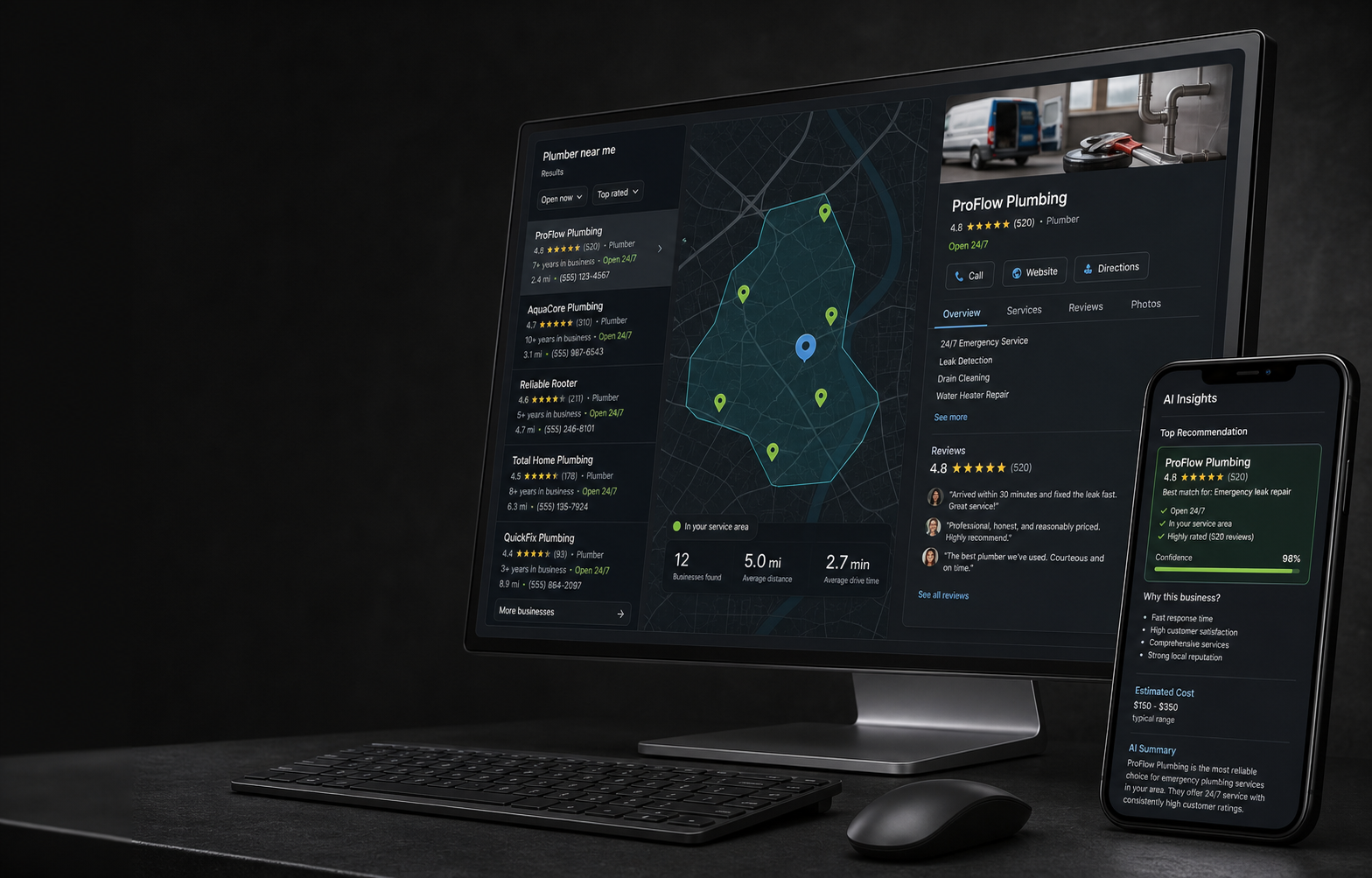
Homeowners compare Maps, reviews, photos, hours, service pages, financing language, and whether the company looks real enough to let into the home.
Call volume is not the outcome. The useful read is which market, page, profile, prompt, or campaign created work that reached the schedule.
Plumbing marketing is the system that makes a plumbing operator visible, verifiable, and easy to call when homeowners search Google, Maps, reviews, and AI answers. The work connects emergency intent, service-area pages, Google Business Profile, review proof, AEO, and call tracking so the operator can see which searches became booked jobs.
Plumbing marketing works when the right signals line up: service pages, Google profile facts, reviews, local proof, AI answers, and a call path that can be tracked back to booked work.
Vertical expertise shows up in the details: what creates urgency, what proves trust, what gets checked, and what should be tracked after the call, form, case, booking, or reservation.
Emergency leaks, drain cleaning, water heaters, sewer work, repipes, and maintenance each create different intent.
Google, Maps, reviews, local pages, LSAs, and AI answers all shape who gets considered.
Photos, review language, service specificity, city coverage, and clean profile facts reduce doubt.
The operator needs to see which searches, pages, calls, and prompts created jobs on the board.
Local search, profile work, reviews, conversion paths, tracking, and AI visibility all run inside one system instead of alongside each other, and Axis37 runs them with you. What changes is that they stop reporting in isolation. Axis37 builds plumbing operators an Agentic Website, and Korbin is the part inside it that connects what a search, a review, and a call say about each other, then puts that behind the next decision.
Service pages for emergency plumbing, drains, leaks, water heaters, and city coverage, built around fast mobile calls and clear proof.
Pages buyers can verify fastFoundationService-area structure, internal links, and local authority signals for the searches that turn into booked plumbing jobs.
Service-area visibilityFoundationCategories, services, photos, hours, posts, and review language aligned with the plumbing work you want more of.
Map Pack trust surfaceAuthorityReview growth and proof signals that help a homeowner trust the operator before opening the door.
Review and proof signalsConversionCall tracking, missed-call review, form source, and booked-job visibility by service, page, and market.
Calls, forms, booked workGuidancePrompt tests and answer-first structure for the questions homeowners ask AI before choosing who to call.
Prompt tests and AI mentionsThe work runs as a cycle: map the money paths, fix what search systems cannot verify, build proof, tighten conversion paths, then brief the next move.
Separate emergency calls, repair work, replacement work, drain demand, sewer work, repipes, and recurring service so the page structure matches revenue.
Review GBP, service pages, city coverage, schema, reviews, calls, LSAs, local rankings, and AI prompt visibility.
Tighten service-area pages, profile facts, internal links, schema, mobile CTAs, and emergency-intent paths.
Turn real plumbing work into reviews, photos, content, mentions, and authority signals tied to the jobs you want more of.
Connect calls, forms, missed demand, jobs booked, and revenue where the trail is clean enough to trust.
Test prompts, measure Footprint Score movement, compare local competitors, and turn the findings into the next set of fixes.
Tactical briefings at the intersection of plumbing and the work that moves the needle.
Plumbing demand is urgent, local, and trust-heavy. The page, profile, reviews, hours, service-area proof, and call path have to make the operator easy to choose before the homeowner keeps scrolling.
AI tools look for clear service pages, complete profiles, specific reviews, consistent citations, schema, local proof, and answer-first content. The important read is which prompts name the operator, which competitors appear, and which signals are missing.
No. Local SEO is part of the Foundation. AEO, reputation, website conversion, and lead tracking sit on top of that same footprint.
Track calls, forms, missed calls, source, service requested, market, booked jobs, and revenue where the trail is clean enough. Raw call volume is not the same as booked work.
Foundation cleanup starts in month one. Map Pack movement, stronger service-area visibility, and first AI mentions usually take several cycles because authority has to compound.
No. It gives the operator a clearer owned footprint and better source truth, which makes paid channels easier to judge.
The Search Checkup reviews your service pages, Google profile, review proof, AI visibility, call paths, missed demand, and booked-job tracking.
Get My Search Checkup